What Wire Erosion can offer you
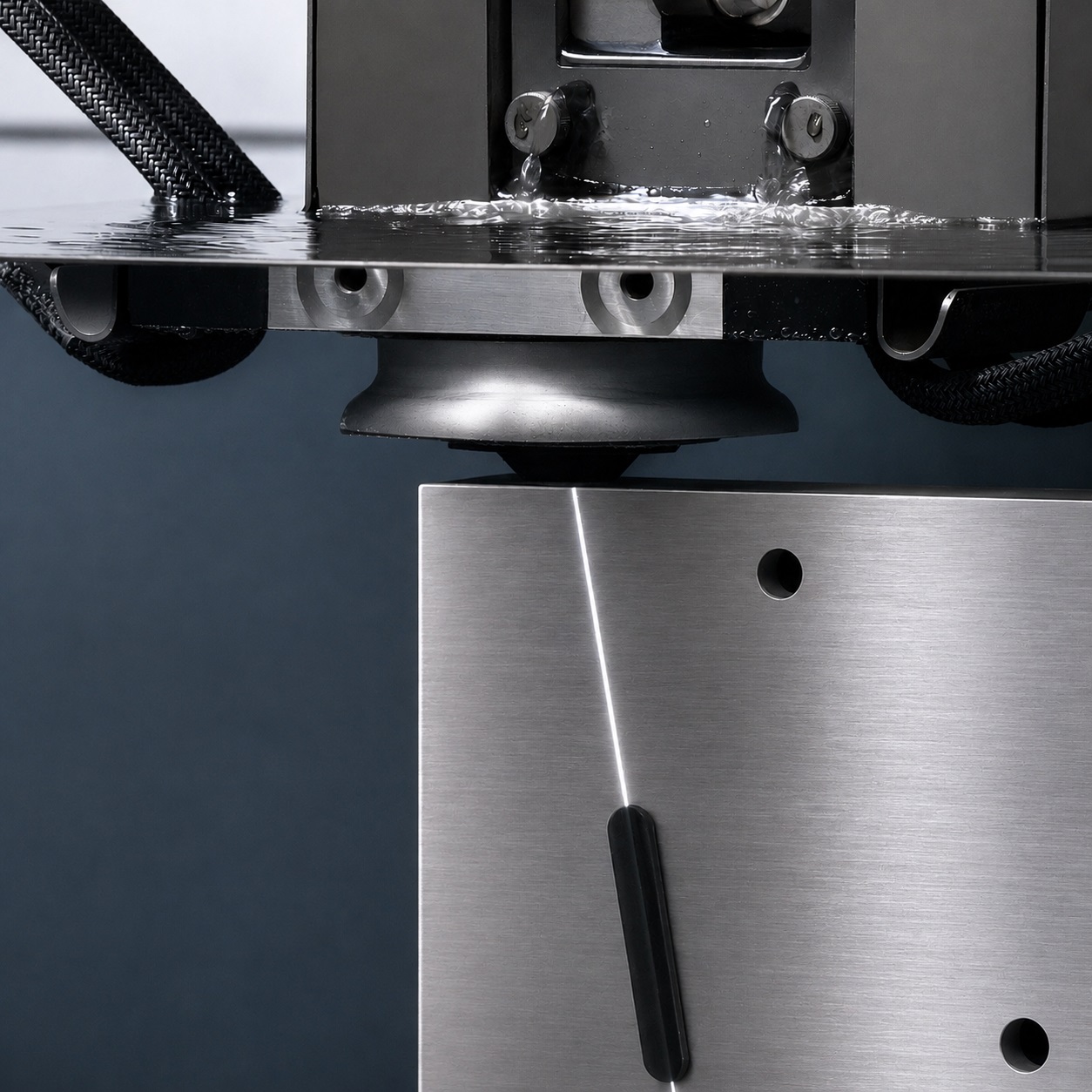
Wire EDM (Electrical Discharge Machining) uses a thin, electrically charged wire — typically between 0.15 mm and 0.3 mm in diameter — to cut through conductive materials with exceptional precision. The wire never contacts the workpiece directly. Instead, material is removed through a series of controlled electrical discharges that occur in a gap between the wire and the workpiece, with the entire process submerged in continuously circulated deionised water to flush debris and maintain temperature stability.
Because there is no mechanical cutting force, Wire EDM is uniquely suited to components that would distort, deflect or fracture under conventional machining. Hardened tool steels, brittle carbides, exotic nickel superalloys and titanium alloys that are otherwise extremely difficult to machine can all be processed to tight tolerances without compromising material integrity.
Tolerances of ±0.005 mm are achievable consistently in production conditions — not just on first-off samples. Surface finishes are excellent straight off the machine, reducing or eliminating the need for secondary hand-finishing. Complex profiles, fine internal radii, taper cuts, and intricate forms that would be impossible to produce with rotary tooling are all within the scope of Wire EDM.
At Electro Discharge Ltd, our Wire EDM machines are operated by experienced engineers in a controlled environment, with full in-house CAD/CAM programming and inspection capability. We work to customer drawings and CAD data, accepting IGES, DXF and STEP file formats. Whether you require a single prototype or a high-volume production run, our Wire EDM capability is supported by rigorous quality management in line with AS9100 Rev D and NADCAP accreditation.
Wire EDM is extensively used across aerospace, defence, motorsport, oil and gas, power generation and satellite sectors — anywhere that dimensional accuracy, material integrity and surface finish are non-negotiable.